

Office Phone: 217-357-6056

WCAZ Radio News Archives for 2024-05

Ban on

Ban on ‘captive audience’ meetings, AI regulations among 466 bills to pass this session

Bill allowing digital driver’s licenses also clears General Assembly


A bill banning what unions refer to as employer-sponsored “captive audience” meetings about religion and politics has cleared both chambers of the General Assembly. 

It was one of 466 measures to do so during the Illinois legislature’s recently concluded spring session, including measures targeting artificial intelligence and allowing for digital driver’s licenses. A Capitol News Illinois analysis shows 287 of the bills passed in the session’s final two weeks. 

If the “captive audience” bill is signed by the governor, employers would still be allowed to discuss religion and politics with employees, but workers would have the right to skip the meeting, whether on or off the clock, without retaliation. 

The Illinois AFL-CIO labor organization brought the legislation to state Sen. Robert Peters, D-Chicago, and celebrated its passage as a win for workers. In a news release, Illinois AFL-CIO President Tim Drea said the meetings “are a direct violation of workers’ rights.”

The meetings were made legal in 1947 under what’s known as the Taft-Hartley Act. But labor advocates across the country, including other state chapters of the AFL-CIO and the current National Labor Review Board General Counsel, Jennifer Abruzzo, are working to definitively outlaw mandatory attendance at meetings where anti-union rhetoric is shared. 

Read more: Labor-backed bill banning 'captive audience' meetings awaits House action 

Citing the Colorado governor’s recent veto of similar legislation in which he said he would sign a narrower and more neutral bill, Sen. Jason Plummer, R-Edwardsville, said during debate that the pending legislation, particularly who it would impact and how, is not well defined. 

“Let's not play politics with unconstitutional legislation that's going to get thrown out in the court of law,” Plummer said. 

Of the six states that have introduced similar legislation, only two have ongoing lawsuits. One is in Minnesota, filed by business groups including the National Federation of Independent Business Inc., and another is in Colorado, which was partially dismissed in 2023. 

Senate Bill 3649 advanced out of the Senate on partisan lines, 39-18, after clearing the House 79-30 with some Republican support. The final version was amended to specifically exclude certain groups – including 501(c)(4, 5 and 6) organizations – that participate in lobbying activities and generally exist for the purpose of advocacy.

The bill still needs to be signed by the governor to become law. 


Artificial intelligence protections

A bill that would outlaw the creation and sharing of child pornography made using artificial intelligence was one of several AI-focused measures to clear the General Assembly in its final days. 

House Bill 4623, which was backed by Attorney General Kwame Raoul, would expand current child pornography laws to also cover AI-generated child pornography. 

Backers of the bill said if AI-generated child pornography rapidly increases, law enforcement’s ability to identify real cases would be more difficult. 

The bill, which passed both chambers unanimously, would also ban the distribution of various AI-generated sexual images without consent.

House Bill 4875 would protect individuals from having their voice, image or likeness duplicated by AI for commercial purposes without their consent. The bill would allow recording artists and those they contract with to seek damages for nonconsensual use of their likeness.

The measure, as amended, cleared both chambers unanimously.

House Bill 4762, also passed by both chambers unanimously, would protect performers and other individuals from wrongful use of AI replicas. The bill would make contracts unenforceable if the performer would have performed in person, the use of the digital replica was not defined or detailed in the agreement, and if they were not represented by a lawyer or labor union during the agreement.


Digital IDs

The secretary of state’s office would be able to issue digital identification such as driver’s licenses, learner’s permits or state IDs to Illinois residents under House Bill 4592, which passed both chambers unanimously.

The cards would be issued “in addition to, and not instead of” a physical ID, under the bill. 

The measure has an effective date of Jan. 1, 2025, giving the secretary of state’s office time to implement and test a new digital ID platform before it goes live.

Under the bill, agencies and private entities may choose if they want to accept electronic IDs in place of physical ones, but “upon request by law enforcement, a credential holder must provide the credential holder's physical credential.”

A digital phone application that registers identification cards with the secretary of state’s office would cost a maximum of $6 under the bill heading to the governor’s desk.

In 2021, the American Civil Liberties Union published a report warning of potential privacy risks that could come with digitizing government IDs. The bill addresses some concerns by barring law enforcement from requesting or searching through an individual’s phone. 

It also requires the secretary of state’s office to “use an electronic credential system that is designed to maximize the privacy of the credential holder ... and shall not track or compile information without the credential holder's consent.”


Family obligation discrimination

House Bill 2161 bans workplace discrimination based on family responsibilities.

Senate sponsor Sen. Natalie Toro, D-Chicago, said the bill’s goal is to “prohibit discrimination on an assumption that your family responsibility will impede your work performance.” 

For example, Toro said, a woman cannot currently be passed over for a promotion because of her family status if the promotion goes to a man with a similar status. But she could lose out on the promotion to another woman with no children.

Sen. Jil Tracy, R-Quincy, called the bill unnecessary, as the U.S. Supreme Court has interpreted federal Title VII – which prohibits gender and sex-based discrimination – to apply to cases regarding family obligations.

The bill passed the Senate 37-19 and the House 74-29. It will become law if signed by the governor.


Exoneree higher education benefits

Senate Bill 3771 allows exonerated individuals to pass a state benefit covering higher education costs on to dependents. It passed the Senate 45-11 and the House 71-38.

Illinois leads the nation in exonerated individuals, with over 500 people having wrongful convictions overturned. Payouts to exonerees in Illinois remain some of the lowest in the country, but the Higher Education Student Assistance Act covers public university tuition and fees for exonerees.

Read more: His conviction was overturned after 35 years wrongfully served. State law caps his compensation at 14 years.

The bill allows the state benefit to cover private, not-for-profit university costs so long as the total does not “exceed the maximum grant payable” towards a grantee in “the most expensive comparable” program at an Illinois public university.

If the recipient, either an exoneree or their dependent, maintains “satisfactory academic progress,” grant funds can pay up to eight semesters or 12 quarters of full tuition and mandatory fees.


Mold public health campaign

Senate Bill 1087 requires the Illinois Department of Public Health to create a public health awareness campaign informing the public about the dangers and importance of removing indoor mold. It also requires IDPH to establish “procedures for parties that provide mold remediation services to register with the state.”

The bill passed out of both chambers without opposition.


Capitol News Illinois is a nonprofit, nonpartisan news service covering state government. It is distributed to hundreds of newspapers, radio and TV stations statewide. It is funded primarily by the Illinois Press Foundation and the Robert R. McCormick Foundation, along with major contributions from the Illinois Broadcasters Foundation and Southern Illinois Editorial Association.

Health insurance changes targeting

Health insurance changes targeting ‘utilization management,’ more will head to governor

Pritzker first announced the initiative during his budget address


SPRINGFIELD – A package of health insurance reform measures that Gov. JB Pritzker called for at the beginning of the legislative session will soon be headed to his desk for his signature.

The Illinois House gave final approval Saturday to a pair of bills that limit the ability of insurance companies to deny coverage or steer individuals toward lower cost, and sometimes less effective, treatments and medications, strategies sometimes referred to as “utilization management.”

The package also includes measures giving the Illinois Department of Insurance authority to approve or deny premium rate changes in large-group health insurance plans while banning the sale of short-term, limited duration individual health plans, which are sometimes derisively referred to as “junk insurance.”

In a statement issued moments after the House vote, Pritzker called it “a historic win.”

"When I first proposed this legislation in my FY25 Budget Address, I said we would put power back into the hands of patients and their doctors and reform predatory insurance companies and their unfair practices,” he said. “That’s exactly what we did.”

Pritzker first called for the changes in his State of the State address in February, saying they would “save lives and lower healthcare costs for millions of Illinoisans.” 

The biggest changes are included in House Bill 5395, dubbed the “Health Care Protection Act.” Among other things, it requires insurance companies to use “generally accepted standards of care” when deciding whether to cover certain treatments or services.

It also bans the use of step therapy requirements in prescription drug plans that require a patient to show that a lower-cost alternative drug is ineffective before covering a more expensive drug recommended by their physician. 

The bill also prohibits insurance plans from requiring prior authorization before covering in-patient psychiatric care. For other kinds of care, it requires insurers to post publicly on their website when prior authorization is required.

It also requires insurers to maintain accurate, up-to-date lists of providers who are included in their networks. 

And it gives the Illinois Department of Insurance authority to approve or reject proposed premium rate changes in large-group health insurance plans, similar to the authority it already has over small-group plans.

Another provision which the Senate put into a separate bill, House Bill 2499, would prohibit the sale of one type of insurance known as “short-term, limited duration” health policies – sometimes derisively referred to as “junk insurance” – that do not have to meet minimum standards under the federal Affordable Care Act.

Those changes apply only to the types of insurance plans regulated by the state. Those include employer-based group plans that are fully funded by the insurance carrier as well as plans offered by local governments and plans provided under the state Medicaid program. They do not apply to plans regulated under the federal law known as ERISA – the Employee Retirement Income Security Act of 1974.

The package originally passed the House as a single bill in April with bipartisan support, 81-13. Pritzker spent the next several days touring the state to drum up public support, making appearances with doctors and patients at health care facilities in Belleville, Peoria, Rockford, and other cities.

Meanwhile, talks continued behind the scenes between advocates for the changes and the Illinois Life & Health Insurance Council, the insurance industry’s main lobby group. Over the next several weeks, those talks led to compromise language on the use of step therapy and prescription drug formularies, as well as Department of Insurance review of large-group rate changes.

“I appreciate having a seat at the table throughout this legislative process and thank the governor for hearing our concerns and engaging us as a partner,” ILHIC president Laura Minzer said in a statement Saturday. “While we may not find agreement on every provision, being heard, and listened to, is integral to finding the best solutions for this meaningful legislation. It is with this spirit of cooperation that the council will continue working to make improvements during the legislation’s implementation phase.”

Talks in the Senate also led to the decision to separate the package into two bills, splitting off the more contentious proposal to ban the sale of short-term limited duration policies into separate legislation.

Those policies are typically sold to people who are temporarily unemployed or have some other circumstance in their life that causes them to need coverage for only a short period. But while they often cost less than traditional policies, many of them also have high deductibles and do not offer the same types of benefits that are mandated in other plans, such as coverage for emergency treatment, laboratory services or preexisting conditions.

“I have had people reach out to me who thought they had coverage when they had these short-term limited duration plans, only to find out that they were not covered,” Sen. Laura Fine, D-Glenview, said during Senate debate Thursday. “Their prescription drugs were not covered. Their emergency services were not covered. And it ended up costing them a whole lot more than it would have, had they had the insurance that they thought was possible and that they thought that they were paying for.”

Republicans, however, argued that for many people, short-term limited duration plans are a more affordable alternative than continuing an employer-based policy through a COBRA plan or buying an individual plan on the Affordable Care Act exchange market. They argued consumers should be allowed to choose the option that is best for them.

Sen. Win Stoller, R-East Peoria, compared short-term policies to mobile homes, which may be built of inferior materials compared to a traditional home, but which are still suitable for some people.

“And I would never be so audacious to suggest that we should ban mobile homes. I think that's absurd,” he said. “But that's exactly what we're doing here in relation to these short-term health plans, saying that we know better than you, we know what's best for you. We don't think you can make an informed decision.”

The stand-alone bill, HB 2499, passed the Senate on a straight party-line vote, 40-19. The remainder of the package contained in HB 5395 passed with a handful of Republican votes, 45-14.

Likewise, the vote in the House to concur with the Senate changes to the ban on short-term limited duration policies fell along party lines, 72-35. The concurrence vote on the remainder of the package passed with a handful of Republican votes, 83-23.


Capitol News Illinois is a nonprofit, nonpartisan news service covering state government. It is distributed to hundreds of newspapers, radio and TV stations statewide. It is funded primarily by the Illinois Press Foundation and the Robert R. McCormick Foundation, along with major contributions from the Illinois Broadcasters Foundation and Southern Illinois Editorial Association.


Rep. Norine Hammond - Rep. Hammond votes against largest budget in state history

Rep. Norine Hammond - Rep. Hammond votes against largest budget in state history


Five days after the General Assembly was scheduled to adjourn its spring session, the Illinois House finally passed a State Budget for Fiscal Year 2025 early Wednesday morning.

The partisan-crafted $53.1 billion budget passed by Illinois Democrats is the largest spending plan in state history. The new State budget is over $13 billion more than the $40 billion budget passed during Governor JB Pritzker’s first year in office (2019) and is $400 million more than what the Governor himself proposed back in February.

Deputy Republican Leader Norine Hammond (R-Macomb), the chief budgeteer for the House Republican Caucus, voted against the record-high State budget and criticized the tax hikes and bloated spending contained within the Democrats’ plan.

Attached is the audio from Leader Hammond’s floor speech during debate.

GROWMARK Announces 2024 Scholarship Winners

GROWMARK Announces 2024 Scholarship Winners

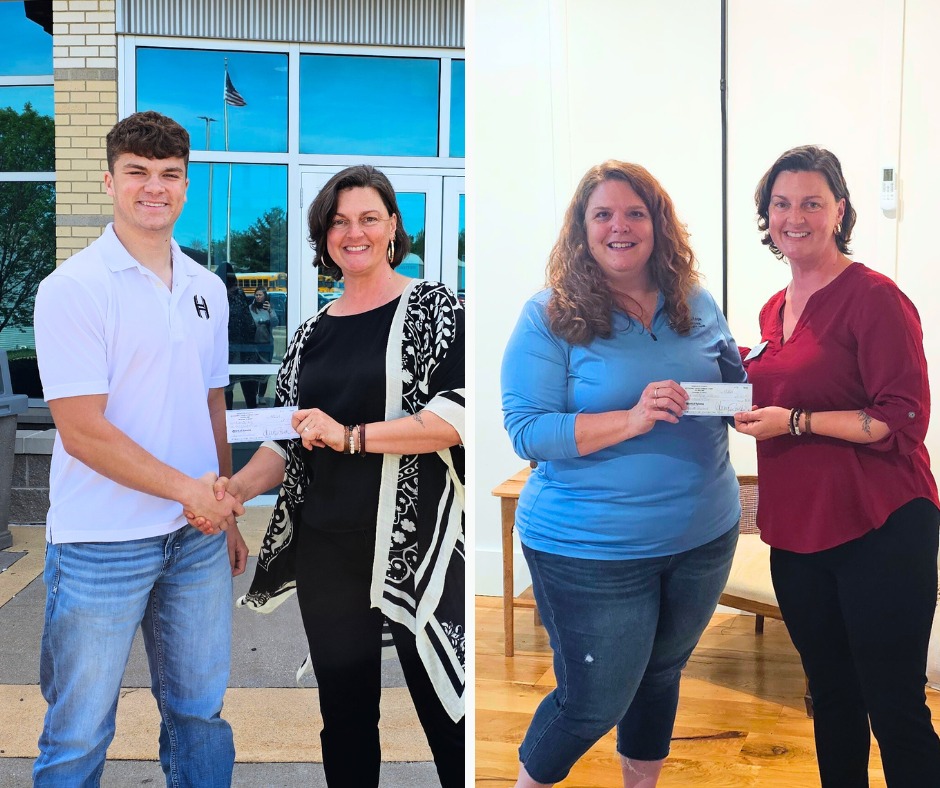
 Fifty-four students have been selected to receive scholarships totaling $2,000 each through the GROWMARK Foundation. Nearly 500 students from across the United States and Ontario, Canada, applied for the scholarships. Students who received the scholarships will have those funds available for the fall 2024 semester.

“As a diverse wholesale agricultural cooperative, GROWMARK sees value in supporting students who are pursuing careers in agriculture as well as any business-related field. We’re excited to be able to help these students achieve their academic goals while also showing them that our industry is full of opportunities including working for GROWMARK or an FS company after they graduate.”

Scholarship recipients are divided into three categories:

GROWMARK is an agricultural cooperative serving almost 400,000 customers across North America, providing agronomy, energy, facility engineering and construction, and logistics products and services, as well as grain marketing and risk management services. Headquartered in Bloomington, Illinois, GROWMARK owns the FS trademark, which is used by member cooperatives. More information is available at GROWMARK.com.

### 

Chaddock Foster Parent Appreciation Event Tomorrow! May 29th 2024

Chaddock Foster Parent Appreciation Event Tomorrow!

Quincy, IL – In recognition of National Foster Care Month, the Chaddock Foster and Adoption Services team is hosting a Foster Parent Appreciation event. So far over forty foster families have RSVP’d to the event. The event will be hosted at Quincy’s Upper Moorman Park (Large Pavilion) Wednesday, May 29th from 5:30 – 7:30 p.m.
The event features a carnival theme with prizes, games and themed foods! We’d absolutely love to have and welcome members of the media. Members of our F&A team and guests will be available for questions.
For additional details regarding our Foster Parent Appreciation event, please contact Lindsey Miller.

Located in Quincy, IL, Chaddock is an internationally recognized leader in the treatment of children suffering from the psychological, emotional, and spiritual effects of significant abuse, neglect and trauma. Chaddock Foster and Adoption Services is consistently rated as one of the top foster care agencies in the state of Illinois, currently serving Adams, Brown, Hancock and Pike Counties. For more information, visit
chaddock.org.

Sectional Championship- Baseball 5/25/24 Information

Sectional Championship- Baseball 5/25/24 Information

Sectional Championship: Saturday, May 25
Game 3 at 2:00pm: Carthage (Illini West)  vs. Peoria Notre Dame

Advancement: The winner of the Sectional will advance to the Geneseo Super-Sectional on Monday, May 27 to face the winner of the Beecher Sectional at 1:00pm at Stone Field at Richmond Hill Park in Geneseo.

Tickets: Per the IHSA:
ALL digital sectional tickets will be $7.00 and should be purchased through GoFan digital ticketing.
ALL sectional tickets purchased with cash at the event will be $8.00 per ticket.
Digital Ticket links:
Saturday - (1 Championship Game) - https://gofan.co/event/1519600?schoolId=IHSA

MEMORIAL MEDICAL CLINICS OFFER WALK-IN SPORTS PHYSICALS

MEMORIAL MEDICAL CLINICS OFFER WALK-IN SPORTS PHYSICALS

Carthage, IL, 5/22/2024 – Memorial Medical Clinics are excited to announce upcoming dates for students to walk in and receive a sports physical. These sports physicals will be offered at Memorial Medical Clinics in Bowen, Carthage, Colchester, Broadway (Hamilton), LaHarpe, and Nauvoo.
Memorial Medical Clinics will offer walk-in sports physicals on:
? June 18, 1:00 PM – 4:30 PM at Colchester, 110 Market Street, 309-776-3301.
? June 26, 4:00 PM - 7:00 PM at LaHarpe, 501 E. Main Street, 217-659-3844.
? July 11, 1:00 PM – 4:30 PM at Broadway (Hamilton), 951 Broadway Street, 217-551-3100.
? July 18 &; 25, 1:00 PM – 4:30 PM at Carthage, 1450 North Co. Road 2050, 217-357-2173.
? July 19, 8:00 AM – 4:30 PM at Bowen, 209 E. 5th Street, 217-842-5211.
? August 8, 8:15 AM - 12 PM at Nauvoo, 1370 Mulholland Street, 217-453-6802.
No appointment is necessary; students will be seen in order of arrival. The cost of the sports physical is $10; however, all proceeds will benefit the school’s athletic department where said student attends school. These sports physicals will not include a school physical. No immunizations  will be given at these physicals, and no illness or injury can be treated or reviewed. Students must be accompanied by a parent/guardian, or a parent/guardian must be reachable via phone.
For more information regarding sports physicals, please visit www.mhtlc.org.

MEMORIAL MEDICAL CLINICS OFFER WALK-IN SPORTS PHYSICALS

MEMORIAL MEDICAL CLINICS OFFER WALK-IN SPORTS PHYSICALS

Carthage, IL, 5/22/2024 – Memorial Medical Clinics are excited to announce upcoming dates for students to walk in and receive a sports physical. These sports physicals will be offered at Memorial Medical Clinics in Bowen, Carthage, Colchester, Broadway (Hamilton), LaHarpe, and Nauvoo.
Memorial Medical Clinics will offer walk-in sports physicals on:
? June 18, 1:00 PM – 4:30 PM at Colchester, 110 Market Street, 309-776-3301.
? June 26, 4:00 PM - 7:00 PM at LaHarpe, 501 E. Main Street, 217-659-3844.
? July 11, 1:00 PM – 4:30 PM at Broadway (Hamilton), 951 Broadway Street, 217-551-3100.
? July 18 &; 25, 1:00 PM – 4:30 PM at Carthage, 1450 North Co. Road 2050, 217-357-2173.
? July 19, 8:00 AM – 4:30 PM at Bowen, 209 E. 5th Street, 217-842-5211.
? August 8, 8:15 AM - 12 PM at Nauvoo, 1370 Mulholland Street, 217-453-6802.
No appointment is necessary; students will be seen in order of arrival. The cost of the sports physical is $10; however, all proceeds will benefit the school’s athletic department where said student attends school. These sports physicals will not include a school physical. No immunizations  will be given at these physicals, and no illness or injury can be treated or reviewed. Students must be accompanied by a parent/guardian, or a parent/guardian must be reachable via phone.
For more information regarding sports physicals, please visit www.mhtlc.org.

Ward, Saey honored as 2024 Sandburg alumni award winners

Ward, Saey honored as 2024 Sandburg alumni award winners


Carl Sandburg College recognized its 2024 alumni award winners during the college’s 56th annual Commencement on Thursday evening at its Galesburg campus.


Jamal Ward, a 2000 graduate, was selected as Distinguished Alumnus Award recipient, and Dr. Stephanie Saey, a 2015 graduate, received the Pacesetter Award.


2024 Distinguished Alumnus Award
Jamal Ward ’00

Jamal Ward persevered to overcome life's obstacles. His career is dedicated to helping individuals reach their own goals and potential by attaining improved mental and behavioral health.


Raised in Flint, Mich., Ward found a passion for playing basketball that gave him the drive to pursue his dreams and achieve success. Ward played just one semester in his high school career. He seldom attended school and rarely went to class. Ward went on to obtain his GED and play basketball at the University of Alabama at Birmingham Junior College.


Ward transferred to Sandburg for his sophomore season and graduated in 2000 with an associate in arts. He then signed a basketball scholarship to attend the University of Tennessee at Chattanooga. After completing his collegiate career, Ward played professionally in Europe, Canada, Asia and Africa.


Once his playing career was over, Ward obtained his master’s in clinical mental health counseling from Concordia University Chicago. He’s currently the director of operations and clinical oversight for a psychiatric residential treatment facility for Thompson Child and Family Focus in Charlotte, N.C., and owns his own counseling group practice. Previously, Ward worked as a dean of discipline at Farragut Career Academy High School, as a counselor and as director for the McLeod Addictive Disease Center.


“My life has been shaped through community college and my experience at Sandburg in many ways. Community college became a gateway to both academic, professional and personal growth,” Ward said. “Community college exposed me to a diverse range of people, perspectives and experiences, broadening my understanding of the world while challenging me academically and nurturing my intellectual curiosity. I can remember having to pass an additional 13 credit hours in the summer of 2000 to graduate. Without this, I would not have been able to sign an athletic scholarship. Community college is what fueled my ambition and resilience, propelling me to pursue my dreams.


“In essence, my journey through community college and Carl Sandburg College was a defining chapter in my life. Upon leaving Sandburg, I was prepared to navigate future academic challenges with both confidence and determination."

— Stacey Rucker


2024 Pacesetter Award
Dr. Stephanie Saey ’15

An avid runner with a long list of personal and professional achievements, Saey was diagnosed with depression, anxiety and an eating disorder when she was 11 years old. Her struggle led her to unenroll from college after her first semester. She spent a year in residential treatment, working diligently to regain her life. In 2014, she enrolled at Sandburg, and graduated a year later.


After graduating from Sandburg, Saey earned her bachelor’s in biochemistry and biopsychology from Monmouth College. She then began her medical education at the University of Iowa. In 2023, Saey graduated with distinction in both teaching and research along with membership in two prestigious medical honor societies, Alpha Omega Alpha and Gold Humanism. She’s since entered a residency program in internal medicine at Mayo Clinic in Rochester, Minn.


Saey has extensive volunteer experience, from hosting STEM activities that help educate youth to supporting other students in medical school. She served as co-president of the National Alliance on Mental Illness on Campus, was a neurology clerkship student reviewer, organized a monthly support group of Carver College of Medicine students and was an ambassador leader for prospective medical students.


“Oftentimes in medicine, community college students are underrepresented vs. ‘traditional’ applicants who have connections through larger universities and research experiences,” Saey said. “Community colleges may not offer the same preparation for medical school, but Sandburg did strengthen my community ties, reinforced my focus on humanity in medicine and provided me with a personal sense of resilience and gratitude by lessening my financial burden and allowing the prioritization of personal/family life for the initial steps of a long career.”


Saey finished her prerequisite courses at Sandburg debt-free and hopes to fund a scholarship for students who follow a path like hers. She wants to expand the pipeline of community college-to-medical school students to increase diversity among medical providers and train physicians who address health disparities.


“Attending a community college is not a limitation to pursuing a graduate degree,” Saey said. “My life was affected financially and culturally in a positive way that allows me to be a more well-rounded physician. All community college students should feel they have the same opportunity.”

Giannoulias Announces Teen Summer DMV Program

Giannoulias Announces Teen Summer DMV Program
Select Illinois DMVs Will Offer Exclusive Services for First-Time Drivers on Saturdays


or the first time ever, the Illinois Secretary of State’s office is dedicating DMV services exclusively for teen drivers every Saturday during the summer at select facilities, Secretary Alexi Giannoulias announced today.
 
The Teen Summer DMV initiative, which includes opening 12 additional DMVs on Saturdays from 8 a.m. to 12:30 p.m. June 1 to Aug. 31, will cater exclusively to helping teens get their driver’s licenses or permits quickly and conveniently. The effort is part of Giannoulias’ modernization plan to create efficiencies and reduce wait times.
 
“Teen-only DMVs provide working parents, who can’t take time off work during the week to shuttle their child to a DMV, a convenient weekend option where they can make an appointment without waiting,” Giannoulias said. “Getting your first driver’s license is an exciting milestone, and we want to ensure the experience is as easy as possible for Illinois teens and their parents.”
 
To raise awareness, Giannoulias is promoting the Teen Summer DMV program through social media, letters to parents and their teens who will be eligible for a driver’s license this summer and community engagement with high schools.
 
During teen service hours, the office will also have a selfie station for newly licensed drivers and will provide important information on data protection, such as making sure the driver’s license number and address are covered when posting to social media. The locations offering teen hours will use geolocation features on social media to provide a filter specific to the program.
 
State law requires teen drivers and a parent or guardian to visit a DMV in person to complete testing and identity verification prior to receiving their first driver’s license. Illinois DMVs experience an influx of customers during the summer months, especially among teen drivers who make the switch from an instruction permit to a driver’s license.
 
Parents and teens can call (800) 252-8980 to schedule an appointment at any of the 12 DMV locations.
 
The designated teen service hours will make an additional 1,000 appointments per week available to accommodate the nearly 9,000 current permit holders who become eligible for a license this summer. The Teen DMVs will also free up appointments during the week for those needing in-person DMV visits.
 
Teen service hours will be offered at the following locations: Addison; Aurora; Bethalto, Belvidere, Bridgeview, Chicago West; Des Plaines; Elgin; Joliet; Lake Zurich; Plano; St. Charles.
 
The DMV facilities were chosen based on data revealing the highest percentage of teen drivers and the state’s busiest facilities. In addition to the Teen Summer DMVs, 15 other DMVs operate on Saturdays, including two of the largest facilities in the state located on the North and South sides of Chicago. Teens are welcome to make appointments at those facilities on Saturdays as well.
 
Teen drivers interested in obtaining their first license will be scheduled for 10-minute appointments if they have already completed the required behind-the-wheel driving tests through their high school or commercial driving facility. If they need to complete a driving test at a DMV, they will be scheduled for a 30-minute appointment. Teens who need driving permits can also schedule an appointment to take a written test.
 
Any unfilled appointments during teen service hours will become available to the general public at 7 a.m.
 
During teen service hours, information will be provided geared toward new drivers, including details about the restrictions related to a graduated driver’s license (the license for those under 18 years of age), the dangers of distracted driving and how to become an organ donor.
 
Along with a big smile for their driver’s license photos, new drivers will need to bring the following to the DMV:

  • Their logbook for their instructional permit.
  • Their blue and white road test waiver form from their high school if they have one.
  • Their birth certificate.
  • Their physical Social Security Card.
  • Two proofs of address forms, such as school transcripts or their parent’s driver’s license or ID card.

While teen drivers are not required to hold a REAL ID-compliant driver’s license, they are encouraged to apply for one during these designated teen hours. A list of REAL ID requirements is available at realid.ilsos.gov
 

-#-

Carthage Public Library launches its Read, Renew, Repeat summer reading program

Carthage Public Library launches its Read, Renew, Repeat summer reading program

Carthage Public Library launches its Read, Renew, Repeat summer reading program on May 29, 2024 at 6:00 p.m. The library invites summer readers to come to the library and decorate their own reading bag for the summer. Participants who have registered before May 29, also get entered to win a free day pass to the pool.


During June and July, the library will host a range of free activities for children, teens, and adults to encourage and support a love of reading, and a love of the nature around them. “We have a variety of guests over the summer months and many other fun program opportunities,” says program coordinator Tori Buckert.
There’s also a serious side to summer reading. Research has shown that reading over the summer prevents summer reading loss. Studies also indicate students who read recreationally outperformed those who don’t. Students read more when they can choose materials based on their own interests.
Participants of all ages can win prizes for reaching their reading goals, by registering and keeping track of their reading on paper or on the ReaderZone App. Whether students read their books or library books we want to encourage everyone to read something they enjoy this summer.
To learn more about the summer reading adventure at the library, please call 217-357-3232 or check out the library’s website carthagepubliclibrary.com/summer-2024 Participants can register at any time.

Illinois launches summer food assistance program

Illinois launches summer food assistance program

Eligible families can receive $120 per child for groceries in summer


 – The state is launching a new program to provide food assistance during the summer for families with children who qualify for free or reduced-price meals at school.

Gov. JB Pritzker joined other state officials and the U.S. Department of Agriculture Thursday to announce that Illinois will take part in the federally funded Summer EBT program, which provides qualifying families with a one-time benefit of $120 per child that can be used to buy groceries during the summer months.

Speaking at a predominantly low-income elementary school in Springfield, Pritzker said it’s important all year long to ensure that children have enough food to eat.

“Food insecurity is absolutely detrimental to a child’s development,” he said. It impacts academic performance, social function, and mental and physical health.”

Pritzker noted the program began as a “stop-gap” measure to address the needs of low-income families with school-age children during the COVID-19 pandemic, when many school buildings were forced to close. 

The program proved so successful in helping alleviate child hunger that Congress acted in 2022 to make it permanent. This summer will mark the first under the new, permanent authority.

“Summer EBT is evidence-based, meaning we know it works,” said Stacy Dean, deputy undersecretary for food, nutrition, and consumer services at USDA, which funds the program. “It’s been tested, piloted, and gone through rigorous research to show that it reduces hunger and increases the intake of nutritious foods (for) the kids who participate.”

The program is open to children who are also eligible for free or reduced-price meals at school. That means they must come from households with incomes at or below 185 percent of the federal poverty level – $47,767 for a family of three, or $57,720 for a family of four. 

According to the most recent state report card from the Illinois State Board of Education, 49 percent of all students in Illinois public schools meet that criteria.

There is no citizenship requirement for the program and Summer EBT is not considered under the public charge rule of U.S. immigration law.

With 1 week left in session, Pritzker admin says all revenue options remain on the table

With 1 week left in session, Pritzker admin says all revenue options remain on the table

With governor’s $1.1 billion plan in question, General Assembly considers its options


While the governor’s office instructed its agency directors to identify $800 million in potential budget cuts last week, all facets of his plan to raise $1.1 billion in revenue to avoid those cuts remain under consideration. 

Deputy Gov. Andy Manar relayed that point on the latest episode of “Illinois Lawmakers” this week, adding that the administration is also open to ideas from lawmakers. The program has been recently acquired by Capitol News Illinois and filmed this week on Thursday. 

Episodes of “Illinois Lawmakers” are available here on Friday afternoons 

“The governor has said that if the legislature doesn't support one or multiple of those individual pieces of his proposal, whether that's revenue or spending, that all ideas should be welcomed,” Manar told host Jak Tichenor. 

There’s a week left before the General Assembly is scheduled to adjourn on May 24 – and two weeks left before more votes are needed to pass an immediately effective budget – but the last-minute budgeting process is nothing new. Budget negotiations in recent years have resulted in late nights and the occasional overtime session but have ultimately ended in agreement among most Democrats, who control the legislature. 

“I have no doubt this will come together in the coming week or two,” Manar said. “And we will again pass now our sixth balanced budget.”

Thus far, the negotiations between the governor's office and Democratic leaders have spawned at least one likely addition to the revenue mix that could raise another $30-$50 million beyond what Pritzker had planned. 

Sen. Cristina Castro, a high-ranking Democrat from Elgin, told Tichenor she’s pushing a “re-renters” tax on third-party entities that resell large blocks of hotel rooms. Castro said those groups don’t pay the standard hotel operator’s room occupation tax, but they’d be required to do so under her plan, which she expects to be included in the final revenue package. 

While other additions could be forthcoming, the ultimate revenue plan is likely to include at least some portion of Pritzker’s initial proposal if state spending is to reach the roughly $53 billion mark he proposed. His revenue plan, and the opposition to it, is summarized below.


$526 million – extending an expiring cap

Nearly half of the governor’s proposed revenue increase comes from a plan to make a corporate tax deduction more generous than it was for the previous tax year. 

Corporations were allowed to carry forward $100,000 in net operating losses for the most recent tax period. Next time they file, under the governor’s plan, they’d be able to carry forward $500,000 in net operating losses. 

So how is it revenue-generating? 

The $100,000 cap was set to expire this year, meaning there would be no cap in place if lawmakers take no action on the measure. So putting the cap in place – and allowing corporations to claim more operating losses – would increase revenue by $526 million. 


$200 million – upping the tax on sportsbooks 

Right now, Illinois sportsbooks – or those who take the bets, such as DraftKings, FanDuel and state casinos – pay a 15 percent tax on their net revenues. When sports betting became legal with the passage of a 2019 law, those revenues were earmarked to fund bond debt taken out to support the state’s building infrastructure. 

Pritzker has proposed hiking the tax rate to 35 percent, with everything beyond the previous rate going to the General Revenue Fund – or the state’s main spending account. While sportsbooks have said they’d offer fewer profit boosts and other enticements to bettors if the measure passes, Pritzker emphasizes it’s not those making the bets, but those taking them that will bear the brunt of the tax hike. 


$175 million – shifting some expenses to the Road Fund 

Some labor unions and road builders oppose another facet of the plan – an accounting measure that moves some public transit spending to the Road Fund and frees up General Revenue Fund space. 

The Road Fund would send $175 million to the Public Transportation Fund – an expenditure that falls in line with the 2016 “lock box” amendment to the state’s constitution that limits taxes collected on motor fuel as well as transportation-related fees to be used only on transportation-related projects. 

As a result of that move, an extra $175 million would remain in the General Revenue Fund. 

While at first blush it appears to be an accounting trick, such a move faces opposition from certain labor unions – a powerful Democratic constituency that opposes the redirection of any dollar from road- and bridge-building.


$101 million – cap on the “retailers discount” 

Another proposal would generate $101 million by capping Illinois’ so-called “retailers discount.” Illinois retailers receive a discount of 1.75 percent of the sales tax they collect as reimbursement for their efforts to collect them. The governor’s change would cap the amount claimed at $1,000 per month. 

Illinois Department of Revenue Director David Harris said in March the proposed cap would affect only “2 to 3 percent” of retailers – but would have a “significant” impact on the largest retailers.  

The Illinois Retail Merchants Association – a powerful lobbying group in Springfield – opposes a reduction to the credit. During a House committee hearing this week, IRMA President Rob Karr said Illinois retailers do a lot of work to administer the tax – including reading food labels to determine ingredient makeup so they know which tax to apply on each specific item among several other bureaucratic requirements.  

All that costs time and money to administer, Karr said, noting: “1.75% is a partial reimbursement for our costs of serving as the state sales tax collector.” 

But negotiations continue on that plan. House Bill 5844, sponsored by Rep. WIll Guzzardi, would increase the percentage of the discount to 2.5 percent but lower the cap to $500 monthly. 


$118 million – other, less publicized proposals 

The governor’s revenue plan also contains a pair of less publicized – and likely less popular – proposals. 

That includes a $25 million redistribution of real estate tax revenues to GRF instead of the Open Space Land Acquisition and Development Fund, which funds parks and recreation projects.  

Groups like the Illinois Association of Park Districts have been maneuvering to block the move – and prevent such “fund sweeps” moving forward. House Bill 4502, which would prevent sweeps of OSLAD revenues, cleared the House 108-0 and awaits action in the Senate. 

The final $93 million leg of the governor’s revenue plan pertains to individual taxpayers. It increases the state’s standard deduction – an amount most taxpayers can claim against their taxable income – to $2,550, up from $2,425.

In the same vein as the corporate net operating loss cap – it’s considered revenue-generating because the deduction was slated to increase to $2,775 under statute, due to inflation. In other words, the governor wants the deduction to increase, but in a less generous fashion than it would have if lawmakers simply did nothing.


Capitol News Illinois is a nonprofit, nonpartisan news service covering state government. It is distributed to hundreds of newspapers, radio and TV stations statewide. It is funded primarily by the Illinois Press Foundation and the Robert R. McCormick Foundation, along with major contributions from the Illinois Broadcasters Foundation and Southern Illinois Editorial Association.

New Program for Fall: Alternative Learning Options Program (ALOP)

New Program for Fall: Alternative Learning Options Program (ALOP)

The Regional Office of Education #26 is happy to announce they will be transitioning their current L.E.A.P. program, funded by a community partnership grant, to a new program in the Fall of 2024.

MEMORIAL HOSPITAL AND CARTHAGE PUBLIC LIBRARY TEAM UP FOR

MEMORIAL HOSPITAL AND CARTHAGE PUBLIC LIBRARY TEAM UP FOR

“STORY TIME AND SNACK MAKING” WORKSHOPS

 IL—Memorial Hospital and Carthage Public Library are excited to announce a
collaborative effort to host a series of “Story Time and Snack Making” workshops. These
engaging workshops will introduce children to healthy eating habits and the importance of
nutrition in fueling their bodies. These workshops will combine the joy of story time with
interactive snack crafting activities, providing a fun and educational experience for young
participants.
The workshops will take place at the Memorial Hospital Health & Wellness Center, located on the Memorial Hospital campus, on June 5, July 3, and August 7 from 10 AM to 11 AM. This free series of events is open to preschoolers through incoming 2nd graders. Each session can accommodate up to 20 children, who must be accompanied by an adult.


Registration is required for these workshops. Participants can register at
mhtlc.org/services/health-wellness-center/teaching-kitchen/.
Pictured: Memorial Hospital’s Culinarian Sophia C. Brackenbury teaches children how to makebread rolls at the Warsaw Wellness Expo on April 20, 2024.

Capitol Briefs: House OKs program for student teacher stipends

Capitol Briefs: House OKs program for student teacher stipends – but not the funding for it

SPRINGFIELD – The Illinois House approved a bill Tuesday to allow student teachers to receive stipends while earning their education degree, even though the money needed to fund those stipends is unlikely to be included in next year’s budget.

House Bill 4652, by Rep. Barbara Hernandez, D-Aurora, authorizes the Illinois Board of Higher Education to disburse stipends of $10,000 per semester to student teachers working in public schools. That’s the rough equivalent of $15 an hour, based on a standard 40-hour work week. It also authorizes stipends of $2,000 per semester to the teachers who supervise them.

But the authority to disburse those funds would be subject to appropriations. And with an estimated annual cost of $68 million to fully fund the program, Hernandez conceded it is unlikely such funding will be included in the budget for the upcoming fiscal year that lawmakers are currently negotiating.

“I do not think so, unfortunately,” she said during debate on the House floor.

The proposal is an initiative of the Illinois Education Association, the state’s largest teachers union, and the advocacy group Advance Illinois. They argued in committee hearings that the lack of compensation for student teachers deters many prospective teachers from completing their degrees, adding to the state’s ongoing teacher shortage.

Read more: Capitol Briefs: Chicago school board, student teacher pay, local food measures all advance in Springfield

The bill passed the House with bipartisan support, 85-23. But it also drew criticism from some who said the General Assembly spends too much time authorizing programs it can’t afford to fund.

“Here we go again, folks. We’re passing bills that are subject to appropriations,” said Rep. Fred Crespo, D-Hoffman Estates. “I get the sense that we think it’s like Monopoly money. But you’re creating a line item and you’re putting pressure on the budget. It’s an empty promise that gives people a false sense of hope.”

The bill next goes to the Senate for consideration.

MEMORIAL HOSPITAL WELCOMES MADDIE SHUTWELL, CERTIFIED CHILD LIFE SPECIALIST

MEMORIAL HOSPITAL WELCOMES MADDIE SHUTWELL, CERTIFIED CHILD

LIFE SPECIALIST

Memorial Hospital is pleased to announce the newest addition to its
healthcare team, Maddie Shutwell, MS, Certified Child Life Specialist (CCLS). As a CCLS,
Shutwell's role at Memorial will be to meet the needs of patients and families by providing
education, preparation, procedural support, and therapeutic play to reduce stress and
enable pediatric patients to cope more effectively with their medical experiences. Shutwell will act as an organizational and community resource by aiding in the understanding of the effects of hospitalization on children and adolescents according to both their chronological age and developmental level. Shutwell will also be responsible for assisting families through the initial stages of the grieving process.


With a passion for pediatric care and a dedication to supporting children and families
during challenging medical experiences, Shutwell brings a wealth of knowledge and
compassion to Memorial. 
"I am very excited to bring the child life profession to Memorial. My goal is to eliminate
misconceptions and fears that many children have about the hospital while increasing
appropriate coping techniques. While interacting with pediatric patients, I will use
developmentally appropriate language to prepare and support children with new or
challenging healthcare-related experiences,"states Shutwell.
Shutwell received her Master's in Human Development and Child Life from Illinois State
University. She completed her internship at CS Mott Children's Hospital in Ann Arbor,
Michigan, and has experience working with children from birth to 18 during
hospitalization.

 Families interested in utilizing Shutwell as a Child Life Specialist, call 217-357- 6578.

Kids Summer Cooking Workshops: A Flavorful Adventure at Memorial's Health & Wellness Center!

Kids Summer Cooking Workshops: A Flavorful Adventure at Memorial's Health & Wellness Center!

Memorial Hospital is excited to announce two Kids Summer Cooking
Workshops led by the Health & Wellness Team’s registered dietitians and Chef Amber Clark, these workshops will offer a hands-on experience for kids entering Kindergarten or 1st Grade.
“At Memorial Hospital, we believe in nurturing healthy habits from a young age, and these
workshops are a delicious way to do just that,” said Ashlyn Housewright, Executive Director Community Health & Wellness at Memorial Hospital “It takes our classes to the next level to have a culinary trained chef in conjunction with two registered dietitians as nutrition professionals leading these programs.”
Pizza Party Workshop – June 13 from 10:00 AM to 12:00 PM: On June 13, budding chefs
will roll up their sleeves and dive into the art of pizza making. From kneading dough to choosing toppings, each participant will learn essential kitchen skills while unleashing their creativity.
With a limit of 10 kids per class, each child will receive personalized attention, ensuring a fun and safe environment for culinary exploration. 


Sweet Treats Workshop – July 24 from 10:00 AM to 12:00 PM: The excitement continues
July 24 with our Sweet Treats Workshop, where young chefs will learn to whip up a variety of sweet treats using wholesome ingredients.

With a focus on health and wellness, this workshop promises not only to satisfy sweet cravings but also to promote balanced eating habits.
"These workshops are more than just cooking classes; they're opportunities for kids to learn valuable kitchen skills while having a blast" says Chef Amber Clark.
Registration Details: Registration is required for these events. Participants can register at
https://www.mhtlc.org/services/health-wellness-center/teaching-kitchen/.

The cost for
the Summer Cooking Workshops is $15 per child per event. Spaces for these workshops are limited, so early registration is encouraged.
Pictured: Memorial Hospital’s Chef Amber Clark standing in front of her delicious creations at the recent Warsaw Wellness Expo on April 20, 2024

.

MEMORIAL HOSPITAL

MEMORIAL HOSPITAL’S BEHAVIORAL HEALTH AND EVERGREEN CENTER

CELEBRATE MENTAL HEALTH AWARENESS MONTH

Join Memorial Hospital’s Behavioral Health and Evergreen Center this May to
celebrate Mental Health Awareness Month, a time to spread awareness and help break down mental illness stigma.


In a rapidly changing world that can be complex to navigate, about half of Americans can
remember a time when they were not constantly connected and it was easier to tune out the noise of the world, while the younger half of the population can’t imagine life without the internet.


Modern life can have a significant impact on mental health — for better or for worse. The
disturbing imagery in the media people are exposed to today can be deeply unsettling. At the same time, our current technology also allows us to mobilize and provide collective support more efficiently in times of natural disasters or injustice.


And ironically, while devices connect people more than ever, loneliness is an increasingly
serious public health concern. People can now have conversations with friends and family on the other side of the world in real time. However, constant connection also means that people will know if they weren’t invited to a friend’s party down the street. Recent survey data show that more than half of US adults (58%) are lonely. Finding a sense of calm and focusing on well- being when experiencing mental health concerns can be daunting in our fast-paced society. It can be especially challenging to know where to start.


In honor of Mental Health Awareness Month, Memorial Hospital is raising awareness of the important role mental health plays in our lives. Memorial Hospital’s healthcare professionals are encouraging members of the community to take action toward protecting their mental health and overall well-being.
This month, they encourage you to:
• Educate Yourself: Take the time to learn more about mental health conditions, their signs, symptoms, and treatment options. Understanding mental health can help reduce stigma and encourage seeking help when needed.
• Connect with Others: Reach out to friends, family, or support groups for emotional support and social connection. Talking about your feelings and experiences can help reduce feelings of isolation and loneliness.

• Limit Screen Time: Take breaks from screens and technology, especially social media, which can sometimes contribute to feelings of inadequacy or comparison. Instead, spend time engaging in activities that nourish your mind and body.
• Build a Coping Toolbox: Creating your toolbox can be as simple as writing a list (on your
phone or on paper) of what helps, like breathing exercises or going for a run – this way, when you start struggling with your mental health, you don’t have to remember what to do or search for tips. You can also have a physical toolbox and fill it with things like a stress ball, written notes to yourself, and photos that make you happy. If you make a physical toolbox, it’s a good idea to still include a list of (non-physical) coping skills that help.


If you’re taking steps to improve your mental health but are still struggling or are not sure where  to start on your mental health journey, we encourage you to connect with your healthcare provider or reach out to a member of our team today.
“It’s important to remember that working on your mental health takes time. Change won’t
happen overnight. Instead, by focusing on small changes, you can move through the stressors of modern life and develop long-term strategies to support yourself — and others — on an ongoing basis,” said Valerie Brown, RN, Program Director of Memorial Hospital’s Evergreen Center. 


Mental Health Services available at Memorial Hospital and Clinic in Carthage, IL
Behavioral Health at Memorial Medical Clinic provides care to children ages 4-17 and adults 1 +, including medication management, counseling, and addiction services. For more information, contact 217-357-6888. 

Evergreen Center available at Memorial Hospital in Carthage, IL Evergreen Center is a program designed to meet the unique needs of individuals typically 65 and older experiencing depression or anxiety related to life changes that are often associated with
aging. For more information, contact 217-357-6516.

Pictured: Memorial Hospital healthcare professionals wearing green to celebrate Mental Health Awareness Month.

ANALYSIS:


ANALYSIS: ‘Significant enough’ opposition to Pritzker’s revenue plan leads to call for cuts

When Gov. JB Pritzker proposed his budget for the upcoming fiscal year in February, he sought authority from lawmakers to raise more than $1 billion in revenue through various changes to the state tax code. 

Among other things, he sought to raise $526 million through extending an expiring cap on losses that corporations can claim on taxes, and $200 million by increasing the tax on sportsbooks’ revenues from 15 percent to 35 percent.


But one of his lead lieutenants this week sent a letter to the head of the state’s agencies instructing them to identify $800 million in collective budget cuts if lawmakers don’t deliver on Pritzker's tax requests. 

“As we continue to work with our General Assembly partners to pass our sixth consecutive balanced budget, it has become clear that opposition to proposed revenue is significant enough to direct agencies to prepare for the possibility of reductions to proposed spending,” Deputy Gov. Andy Manar wrote in the letter to agency directors dated May 7. 


While Manar’s letter was addressed to “Agency Directors,” it was just as much a message to rank-and-file lawmakers – particularly those within the supermajority Democratic party. While ideologically aligned on the major points, Democrats have not been immune to intraparty squabbles throughout Pritzker’s tenure. 

The letter comes at a time when lawmakers are entering the final two-week negotiating stretch for the budget before their scheduled May 24 adjournment. (It’s a self-imposed deadline, and that date could be extended a week without changing the number of votes needed to pass a budget). 

But it doesn’t mean cuts are definitely coming, or that revenues are cratering amid late-year tax season filings. 

To the contrary, Manar’s letter came on the heels of positive news – the Governor’s Office of Management and Budget increased its base General Revenue Fund estimate for the upcoming fiscal year 2025 by $295 million, to $53.3 billion. 

Normally, that type of revision, at this time of year – coupled with the GOMB’s $250 million increase for the current fiscal year that ends June 30 – would have lawmakers thinking about new spending. 

REVENUE REVISION EMBED

But in noting there’s at least some question as to whether lawmakers would approve the governor’s February revenue proposals, Manar presented a scenario where the opposite could be true.

“And finally, as your agency prepares for the impact of $800 million in potential spending reductions, please focus on grant programs and other discretionary spending that has increased in recent years,” Manar wrote. 

Grant programs are some of the most popular spending areas for lawmakers, many of whom are accustomed to celebrating the impact of the dollars in their districts through celebratory news conferences and media releases. 

In other words, the letter lays out a dueling reality for lawmakers who are on the fence: curtail popular program spending or get in line with Pritzker's proposed plan to make the money available. 

Manar’s letter was a subject for discussion on the latest episode of “Illinois Lawmakers” – the longest-running Illinois government-focused program in the state’s history that is now a production of Capitol News Illinois.  

The episode of “Illinois Lawmakers” will be available Friday afternoon. Find out more at capitolnewsillinois.com/Illinois-lawmakers. 

Sen. Elgie Sims, D-Chicago, the lead budget negotiator in his chamber, told “Lawmakers” host Jak Tichenor Thursday that Manar’s letter was “a good plan” and not cause for alarm as the session nears its end.  

“You always have to have contingencies A, B and C,” Sims said, adding that the governor’s plan is option A, but negotiations must also be a “reflection of the caucuses’ priorities.”

“So I just saw the memo as part of that process – part of the planning process to make sure as we get ready for the final passage, we have all the options before us,” he said.

House Assistant Majority Leader Jay Hoffman, D-Swansea, echoed Sims, noting Democrats have come together to pass a balanced budget each year since Pritzker took office, resulting in nine credit rating upgrades from the major New York-based rating agencies. 

“So we have to continue to work to get that balanced budget,” Hoffman said. “Now – I don't know that I agree with the deputy governor on having to have all these revenue enhancements in order to have a balanced budget. But we if we have to make some reductions, we'll make them.”

Because Pritzker’s revenue generators would pull in an estimated $1.1 billion, there’s room for his plan to pass in part without requiring cuts as drastic as Manar outlined in his Tuesday letter. 

Deputy Minority Leader Norine Hammond, R-Macomb, told Tichenor she’s unsurprised by Manar’s letter. The budget ask, she said, has been driven up by competing interest groups all vying for a limited pool of funds. 

“And as we know, that becomes a Christmas tree and the revenue needs just become greater and greater,” Hammond said. 

But the House GOP’s lead budgeteer also noted her caucus has not been intimately involved in any cross-party budget negotiations thus far. 

There are other revenue generators in the governor’s plan as well. It seeks to generate $101 million by capping a sales tax discount claimed by retailers, and to transfer some mass transit costs to the state’s Road Fund to generate $175 million. 

Read more: Pritzker agency heads questioned on $1.1 billion revenue proposals

The governor’s office gives far less fanfare to two other proposals: a cap on a widely used personal income tax deduction and a redirection of some tax revenue away from parks and recreation programing. 

The former is a $2,550 cap on the standard deduction claimed by millions of Illinoisans to generate $93 million. It was scheduled to grow to $2,775 if lawmakers don’t change the law. The latter would move a portion of real estate transfer taxes to GRF instead of the Open Space Land Acquisition and Development Fund – one of the most popular of all grant programs – to raise $25 million. 

While Manar’s memo lays down a marker for the final two weeks of budget negotiations, it doesn’t drastically change the state’s fiscal landscape from where it was a week ago, when the legislature’s Commission on Government Forecasting and Accountability reported April revenues came in about as expected. 


In fact, the GOMB’s new estimate is nearly identical to COGFA’s latest projection.  

But the letter does indicate that Pritzker’s budget proposal appears to be facing some turbulence as the plane nears its landing – again, not an uncommon occurrence in Springfield.  


Remote Automated Pharmacy Available at Memorial Medical Clinic Colchester

Remote Automated Pharmacy Available at Memorial Medical Clinic Colchester

– Memorial Medical Clinic Colchester is pleased to partner with Wear Drug to
unveil the region's first Remote Automated Pharmacy, revolutionizing how members of the
Colchester community and surrounding areas can access and receive their medications
conveniently and efficiently.


The Remote Automated Pharmacy is inside Memorial Medical Clinic Colchester, located at
110 Market Street. This groundbreaking addition will provide community members with a
seamless and secure process for refilling their prescriptions.


The Remote Automated Pharmacy works by individuals making a call to Wear Drug in
Carthage to refill their prescriptions. Refills will automatically be sent to the Remote
Automated Pharmacy for individuals living in Colchester and the surrounding community.
Once the prescriptions are loaded into the Remote Automated Pharmacy, individuals will
receive a text message and an email containing a code necessary to open the Remote
Automated Pharmacy. To ensure security and accuracy, the Remote Automated Pharmacy
requires individuals to enter the code from their email or text message, their date of birth,
take a photo using the kiosk, and sign a signature before accessing their medications.
Payment terms are handled beforehand for convenience, eliminating individuals having to
use payment when picking up their prescriptions. In instances where an individual has
questions or needs assistance, a phone is attached to the Remote Automated Pharmacy that will directly connect to a pharmacist at Wear Drug in Carthage. 


The Remote Automated Pharmacy operates during Wear Drug business hours: Mondays
from 9 AM – 7 PM, Tuesday-Friday 9 AM – 6 PM, and Saturdays from 9 AM – 2 PM.
Individuals do not need to enter through Memorial Medical Clinic Colchester to access the
machine as there is a dedicated entrance just to the east of the clinic's main entrance for
easy access.


Memorial Medical Clinic Colchester is proud to partner with Wear Drug to pioneer this
innovative solution, reaffirming its commitment to providing exceptional healthcare
services by prioritizing convenience, safety, and patient satisfaction. For questions,
individuals may contact Wear Drug in Carthage at 217-357-9327.


Pictured left to right: Kristy Wisslead, APRN-FNP at Memorial Medical Clinic Colchester, and Craig Wear, Pharmacist and Owner of Wear Drug

Augusta post office is observing a milestone


Augusta      post office is observing a milestone

A Hancock County post office is observing a milestone.
   Augusta residents have enjoyed a place to pick up their mail for 190 years. The post office there was established on May 13, 1834.
   It was set up by businessman William Abernethy, who founded Augusta with his brother-in-law, Joel Catlin. Both of the Connecticut natives had worked in the South before coming to Illinois, and named Augusta after the Georgia city.
   The postmaster's job wasn't as difficult back then. A contracted carrier on horseback brought the mail to town only once a week. Later, trains and then trucks hauled letters and packages.
   Two years after the post office opened, Abernethy and Catlin were joined by Yale University graduate Dr. Samuel Mead in formally plotting the town.
   The current post office moved into what was known as the American Legion building in 1958 after spending years at a site that also had been used over the years as a barber shop, restaurant, shoe store and a funeral parlor.
   Abernethy died in 1856 at age 85 and is buried in Augusta Cemetery.

Sandburg Foundation awards $88K in innovation grants

Sandburg Foundation awards $88K in innovation grants

 The Carl Sandburg College Foundation recently awarded 12 innovation grants totaling $88,500 to be used toward new initiatives that drive student success.


All Sandburg faculty, staff and instructional departments designed projects of $1,000-$6,000 as a once-a-year opportunity to launch new and innovative ventures. The total amount awarded this year represented an increase of more than $55,000 from 2023.


“The foundation is able to make these innovation grants available in part because of donor generosity,” said Eric Johnson, chief advancement officer for the Sandburg Foundation. “We’re eager to partner and play a role in developing innovations that positively impact student success, our communities, industry and the district. We had a tremendous pool of applicants this year that set the bar high for future innovation grant funding cycles. It was a tough decision for our review committee with plenty of thought and discussion supporting the proposed initiatives.”


Innovation grant funds were awarded for the following projects:
 

Library shelving refresh — Library

The shelving refresh project introduces several innovative features to enhance and optimize space in the Sandburg library. The beginning phase will transform the library shelving system into a more dynamic, user-centric space that embraces technology, provides better accessibility, fosters collaboration and improves the overall library experience for all who use the space.


Hands-on Vernier STEM equipment — Math & Natural Sciences

The hands-on Vernier learning STEM equipment offers a groundbreaking approach to teaching and learning through a fusion of technology, interactivity and real-world experimentation. Vernier is at the forefront of educational technology, revolutionizing the way physics, astronomy and other STEM classes are taught and learned. By combining innovative features with practical experimentation, it better empowers students to explore and understand the fundamental principles of physics in a more dynamic and engaging manner.


Nursing simulation laptops — Nursing

Five new Latitude 5340 laptops for the nursing simulation lab in the new Science & Technology Center will enhance the functionality and effectiveness of the facility. The laptops will improve students' medication administration and documentation by adding experiential learning to knowledge acquired in the dosage calculation course by providing a realistic bedside experience during simulation sessions.


Swing Caddie (SC)-300i golf launch monitors — Athletics (men’s and women’s golf)

Incorporating three SC-300i launch monitors into golf team practices and competitions will revolutionize training for student-athletes, giving them a wealth of accurate and immediate data that empowers players to refine their skills and helps coaches to optimize team performance. The SC-300i monitors provide yardage, ball speed, swing speed, launch angle, smash factor and apex data, which are currently unavailable to the men’s and women’s golf teams during their outdoor practices.


Portable inflatable projection screen — Information Services

This portable projection screen will help enrich campus life, promote community engagement and offer a versatile platform for various events and activities. The college previously rented an equivalent setup for student life and community events, meaning the acquisition of this system will provide cost efficiency.


Solar astronomy technology — Math & Natural Sciences

Two new solar telescopes will provide numerous benefits for students, offering a unique and engaging way to explore the sun. This technology has specialized filters that allow students to view solar features without risking eye damage, ensuring a secure and controlled observational experience when viewing solar flares and active solar regions. Grant funding also was used by the department to purchase glasses for the recent solar eclipse.


Loft cafeteria renovation — Student Life

Members of Sandburg’s Student Government Association came forward this year with an idea to refresh the Loft cafeteria space. SGA members recognized it as an under-utilized space with great potential to serve their peers and the college in numerous ways. The project includes brighter paint and flooring; more natural light; adjusted lighting fixtures for better illumination; new furniture for individual or group gatherings; and attractive seating and workspaces that encourage students to stay on campus while maintaining a flexible area that can be enjoyed by everyone.


Synergy video enhancements — Athletics (baseball)

The Synergy video logging platform offers numerous advantages, including detailed performance analysis, strategic game planning, player development, data-driven performance metrics and enhanced post-game and practice analysis. Synergy provides in-depth video analysis, allowing coaches to break down player performance frame by frame, precisely identifying strengths and areas for improvement.


CPR feedback training manikins and AEDs — Fitness Center

This includes six CPR training manikins and six automated external defibrillators (AEDs). The CPR manikins offer immediate feedback via an app on the efficacy of the skills being performed, such as chest recoil and compression depth and rate. These tools provide learners with real-time guidance, foster confidence and contribute to improved survival rates in critical situations. This equipment will be used every time there is a CPR class administered through the college.


Nomad dental X-ray imaging devices — Dental hygiene

The addition of two Nomads will broaden students’ experiences, employability and exposure to innovative technology. They will provide the opportunity for instructors to train current and future students with the most recent technology being used for dental X-ray imaging. In addition, they will complement other features of the dental hygiene program’s home in the new Science & Technology Center with their ability to be used on the clinical floor and serve as a mobile demonstration model for any classroom or laboratory. The Nomad also provides superior imaging for patients.


Career pathway exploration initiative — Workforce Development & Community Education

The career pathway exploration initiative workshops will introduce participants at Monmouth's Recharge Teen Center to a variety of career opportunities and the corresponding educational pathways offered by Sandburg. This project empowers teens with the knowledge and experience needed to envision their future careers and understand how Sandburg can facilitate their journey toward achieving their goals professionally. These workshops will give teens an immersive experience in various career fields, including health care, technology, trades and business. Each session will offer insights into different professions and highlight the specific programs and credentials Sandburg offers that align with those careers. Through interactive sessions, guest speakers from the industry and hands-on activities, teens will gain a comprehensive understanding of each career and the educational steps needed to get there.


eSkill workforce assessment — Workforce Development & Community Education

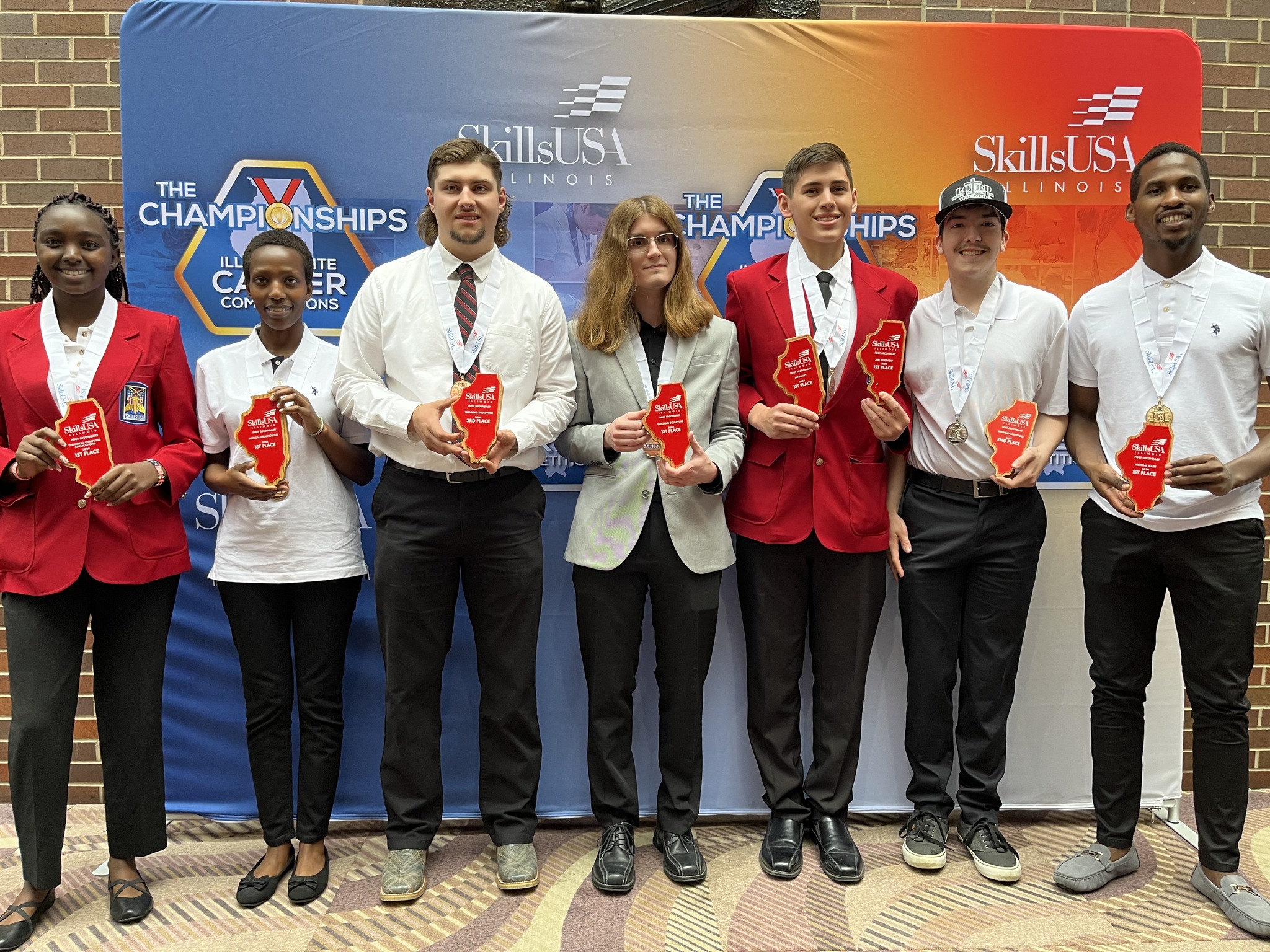
eSkill is a subscription-based program already used by Sandburg that offers customized tests across various disciplines including construction, welding, technical computer applications and health care. In continuing this service, Sandburg can use data analysis to identify specific training needs, enhancing the college’s ability to design collaborative corporate training programs. eSkill has proven instrumental for several students, particularly those competing in the SkillsUSA state contest. By customizing tests to match SkillsUSA standards and competition scoring, Sandburg has significantly enhanced students' preparedness for these knowledge-based tests.


For more information about innovation grants or to make a gift in support of this initiative, contact Eric Johnson at ebjohnson@sandburg.edu or 309.341.5349.

Unforgettable Forgottonia

 Unforgettable Forgottonia’s Macombopoly was revealed  today May 9th 2024 on the  Historic Macomb square


 Unforgettable Forgottonia’s Macombopoly was revealed  today May 9th 2024 on the  Historic Macomb square which resembles the historic game.   May 9th also is the birthday of original creator Lizzie Magie who was born in Macomb, Illinois on May 9th 1966.  Erin Anderson- Lizzie Magie’s great great niece attended the ceremony to celebrate the occasion with her family.


The vision for Macombopoly was 6 years in the making and received a tourism grant from the State of Illinois. 


The  interactive game is available to be played on any phone with the download link, The Link and the statues will be available to play year round. 

MEMORIAL HOSPITAL INSTALLS CONSUMER DRUG TAKE-BACK RECEPTACLE FOR SAFE MEDICATION DISPOSAL

MEMORIAL HOSPITAL INSTALLS CONSUMER DRUG TAKE-BACK
RECEPTACLE FOR SAFE MEDICATION DISPOSAL


Memorial Hospital is pleased to announce the installation of a new
Consumer Drug Take Back Receptacle on its premises. This initiative aims to provide a safe and convenient way for the community to dispose of unused or expired medications,
contributing to the prevention of drug misuse and environmental protection.


The Consumer Drug Take Back Receptacle, located inside the vestibule of the main
entrance under the clock tower at Memorial Hospital, is accessible to the public. Individuals can safely deposit prescription and over-the-counter medications, including pills, capsules, creams, controlled substances, and liquids, without questions.


The Consumer Drug Take Back Receptacle accepts medications in original packaging or
sealed bags. Items that cannot be accepted include herbal remedies, vitamins, supplements,  cosmetics, other personal care products, medical devices, batteries, mercury-containing thermometers, sharps, animal medications, and illicit drugs.


For more information about the Consumer Drug Take Back Receptacle and its guidelines,
contact the Memorial Hospital pharmacy at 217-357-8671.
Pictured: Crystal Huls, Director of Pharmacy at Memorial Hospital

#####

MEMORIAL HOSPITAL TO HOST NAUVOO WELLNESS EXPO PROMOTING COMMUNITY HEALTH AND WELL-BEING


MEMORIAL HOSPITAL TO HOST NAUVOO WELLNESS EXPO PROMOTING

COMMUNITY HEALTH AND WELL-BEING

Memorial Hospital is pleased to announce the Nauvoo Wellness Expo, scheduled
to take place on June 3, 2024, from 5:00 to 7:00 p.m. at the Nauvoo City Center located at 1445 Mulholland St. This event is dedicated to fostering a culture of health consciousness and wellness within the Nauvoo community.


The Nauvoo Wellness Expo will serve as a platform for various workshops, activities, and health screenings aimed at enhancing the overall well-being of community members. Tony Wasielewski, APRN-FNP-C from Memorial Medical Clinic Nauvoo, expressed enthusiasm, stating, "We pleased to participate in an event that prioritizes the health of our community. The Nauvoo Wellness Expo provides an opportunity for individuals to take proactive steps toward better health outcomes and foster a healthier community overall."
The Expo will cater to all age groups, offering activities including essential health screenings like A1C and Blood Pressure checks. Additionally, children’s activities will be available.  Children can visit a special teddy bear clinic, while adults stand a chance to win prizes through various drawings and giveaways.


Ashlyn Housewright, Executive Director Community Health & Wellness at Memorial Hospital, emphasized the significance of the event, stating, "We are excited to gather the community for an evening centered on health and wellness. The Nauvoo Wellness Expo aims to equip individuals with the knowledge to make informed health decisions and lead fulfilling lives."
At the event, community members can meet their local healthcare providers. Attendees can visit interactive wellness stations designed to empower visitors with practical health tips and insights. They can discover more about Memorial Hospital and its comprehensive services to foster a deeper understanding of healthcare in the community.


The Nauvoo Wellness Expo underscores Memorial Hospital's unwavering commitment to wellness promotion and empowering individuals to take control of their health. The event aspires to inspire positive, lasting change within the community.
####

Sandburg students win 6 golds, 8 total medals at SkillsUSA Illinois Championships

Sandburg students win 6 golds, 8 total medals at SkillsUSA Illinois Championships

Sandburg students took home six state championships and eight medals overall at the SkillsUSA Illinois Championships from April 24-26 in Peoria.


Gavin Gerard won gold in masonry and for job interview. Joining him as state champions were Faith Kiprop (technical computer applications), Brian Kipchemis (medical math), Ascar Jepchirchir (medical terminology) and Sullivan Ross (welding sculpture).


As winners of their respective categories, all five students qualified to compete at the SkillsUSA National Leadership and Skills Conference from June 24-29 in Atlanta. This is the second consecutive year Gerard and Kiprop have advanced to the national level. Gerard qualified in the job interview category last year, and Kiprop qualified in technical computer applications.


Also appearing on the medal stand for Sandburg at the state competition were Ryan Leary and Deven Bushong. Leary won silver in welding sculpture, and Bushong was the bronze medalist in that category.


More than 2,000 students took part in the state championship event, which featured competitions in over 100 trade, technical and leadership fields.


More than 5,000 students who are expected to compete at the SkillsUSA national conference. SkillsUSA serves students at the college, high school and middle school level who are preparing for careers in trade, technical and skilled-service occupations and for further education.


Sandburg students (l-r) Faith Kiprop, Ascar Jepchirchir, Deven Bushong, Sullivan Ross, Gavin Gerard, Ryan Leary and Brian Kipchemis hold their awards from the SkillsUSA Illinois Championships on April 26 in Peoria. Gerard (masonry, job interview), Kiprop (technical computer applications), Kipchemis (medical math) Jepchirchir (medical terminology) and Ross (welding sculpture) won their respective categories to advance to the national competition next month in Atlanta. (Courtesy Carl Sandburg College)


Longstanding Community Podiatrist Richard Sowlles DPM Joins Memorial Hospital at New Clinic in Hamilton, IL

Longstanding Community Podiatrist Richard Sowlles DPM Joins

Memorial Hospital at New Clinic in Hamilton, IL

Hamilton, IL—Memorial Hospital is thrilled to announce the addition of Richard Sowlles,
DPM. to its esteemed medical team. With a wealth of experience spanning over three decades, Dr. Sowlles brings his expertise in General Podiatric Care, Surgery, and Wound Care to serve the community of Hamilton and its surrounding areas.


A native of Milwaukee, WI, Dr. Sowlles earned his Bachelor of Science degree from the
University of Wisconsin-Parkside before pursuing his Doctor of Podiatric Medicine at the Dr. William M. Scholl College of Podiatric Medicine at Rosalind Franklin University of Medicine and Science in Chicago, IL. Throughout his career, Dr. Sowlles has remained committed to advancing the field of podiatric medicine and has held memberships in prestigious organizations such as the Illinois Podiatric Medical Association, American Podiatric Medical Association, and Iowa Podiatric Medical Society.


Prior to joining Memorial Hospital, Dr. Sowlles served as a dedicated practitioner in Hamilton, IL, for over three decades. His exceptional clinical skills and compassionate patient care have earned him the trust and respect of the community. Dr. Sowlles also contributed significantly to the Wound Clinic at Keokuk Area Hospital from 2006 until 2022. Additionally, he worked for  Blessing Hospital in Keokuk, IA, from 2022 to 2024.


"I am happy to join a hospital that supports the community I live in," said Dr. Sowlles. With a longstanding practice in Hancock County and affiliation with Memorial Hospital, Dr. Sowlles is eager to continue providing comprehensive podiatric care to patients of all ages. 
In addition to his professional achievements, Dr. Sowlles is a proud father of three boys and two girls. While his children are grown, he remains dedicated to his family and the community. Outside of medicine, Dr. Sowlles enjoys pursuing his hobbies of fishing and golf.
Dr. Sowlles will be available to serve patients at Memorial Medical Clinic Broadway, located at 951 Broadway St. in Hamilton, IL. The new clinic is scheduled to open on May 9, 2024. Patients can expect personalized care delivered with expertise and compassion. To schedule an appointment with Dr. Sowlles, please call 217-551-3100.
#####

July 6th Warsaw - 3rd Annual 2024 Freedom Fest Parade Registration

July 6th  Warsaw - 3rd Annual 2024 Freedom Fest Parade Registration

This year's parade theme is "America The Beautiful"

Here are some key details regarding the parade:


Date: July 6, 2024

Parade Kick-Off Time: 10:00 am

Day-of-Registration / Check-In Starts: 9:00 am

Location: Staging will begin at the Warsaw High School Parking Lot


Traveling Trophy Judging will be held directly after the parade.  We would like to thank the 2023 winners The First Presbyterian Church of Warsaw, IL, and their Wobble Wagon.  This year the winner will be announced during intermission at the Freedom Fest Concert. 


As always there is no fee for participating in the parade, and pre-registration is not required, however, have also added another chance to win for those who complete pre-registration before 11:59 pm on 06/08/2024.  We will be having a drawing for a prize, and the winner of this will be announced the morning of the parade. 


Registration can be completed at the following link:

 https://forms.gle/8xgJj9JrmWgzUJx46.

If you or your group has already registered - THANK YOU!

To confirm your participation or for any further inquiries, please reach out to us at warsawfreedomfestparade@gmail.com


Hancock County Economic Development awards 2 Business Grants for 2024

Hancock County Economic Development awards 2 Business Grants for 2024

Hancock County Economic Development  offered a 5 week workshop to help business complete or adjust their business plans to assist in development and growth  in Hancock County. Each award was $10,000

In the expansion category: Carter Hitz representing Hatz By Hitz.
Carter is a high school senior who started his business  program as a junior and has been so successful in doing so that he is ready for expansion just a year later.

In the start-up category: Gina Clarke on behalf of River's Edge Wellness offering therapy and counseling services in Warsaw. Gina will be offering remote and in-person services to children and adults.

Hancock County Economin Development will be offering this oppurtunity again in January 2025

Democrats muscle through changes to ballot access, advisory questions

Democrats muscle through changes to ballot access, advisory questions

Amendment was introduced and passed within hours 


SPRINGFIELD – Supermajority Democrats in the Illinois House moved quickly Wednesday to push through a change to state election laws that partially limits ballot access and adds three nonbinding referendums to the 2024 general election ballot. 

It’s a move that caused minority party Republicans to vote “present,” then walk off the House floor without even debating the measure, while four Democrats voted against the bill that would amend ballot laws for the election cycle that is already underway.  

Republicans were particularly critical of a provision that prohibits political parties from appointing a candidate to a general election ballot if no member of that party filed nominating petitions for the primary. 

The minority party also criticized Democrats’ hasty movement of the proposed changes from introduction to floor passage. Rep. Jay Hoffman, D-Swansea, filed the amendment to an unrelated bill, Senate Bill 2412, Wednesday morning before it was quickly moved to committee for passage, then to the floor within hours. It now awaits action in the Senate. 

House Minority Leader Tony McCombie, R-Savanna, noted at an impromptu news conference on a Capitol stairwell that the GOP has grown accustomed to legislation moving with little public notice – but it usually happens closer to the General Assembly’s end of May adjournment.  

“But we don't understand the sense of urgency right now, unless the goal – the end goal – is to stifle the democratic process through the changes on slating candidates,” she said.

At the same time the amendment was moving through the House, senators were being briefed separately on the proposed changes.

In the Senate Executive Committee, which meets one floor below the House chamber, Republican Leader John Curran, of Downers Grove, argued that changing the rules in the middle of an election cycle would be unfair to potential candidates who are operating under existing rules.

He also said such a move could add to what he called the public’s growing mistrust of the election system generally.

“There's a lot of talk around the country about stealing elections,” Curran said. “And the faith in the democratic process has been shaken a bit around the country. I believe Illinois would be adding to that, really, national problem, if it took that step here and changed the rules midstream rather than just waiting to the next election cycle.”

But Senate President Don Harmon, D-Oak Park, noted there are other ways to get on the ballot after the primary has passed. 

“A candidate who would want to run for General Assembly seat after the primary will have to run, as they can today, as an independent or a third-party candidate,” Harmon said. “They would no longer be able to appeal to the local party bosses to have them installed as the candidate of a major political party.”

Privately, GOP lawmakers said they believe the proposed change is designed to influence the outcome of one particular race this year – the 112th House District in the Metro East area, where incumbent Rep. Katie Stuart, D-Edwardsville, is running for reelection.

No Republican filed to run in that race in time for the March 19 primary, but party officials say one is currently being lined up.

Republicans believe that district is winnable for them. Stuart won reelection to that seat in 2022 by a 54-46 margin over Republican Jennifer Korte.

Rep. Lindsey LaPointe, D-Chicago, was one of the four Democrats to vote “no” on the bill Wednesday afternoon, though others skipped the vote. She said she’s not opposed to eliminating the slating process beginning in the 2026 election cycle but said doing it now is “moving the goal posts” in the “final minutes of a ballgame.”

“That's problematic for me because as an elected official in Illinois, I'm constantly trying to rebuild trust in Illinois government and politics that many of the people I represent...don't have,” she told Capitol News Illinois after the vote. 

The measure would also pose three nonbinding advisory referendum questions to voters on the November ballot, including asking whether health insurance plans that cover pregnancy benefits should be required to cover in vitro fertilization and other fertility treatments.

That mirrors legislation passed in the state Senate last month that would require IVF and other fertility coverage for insurance plans with pregnancy benefits that are sponsored by companies with 25 or more employees.

The other questions would ask voters whether they’d favor civil penalties for any candidate who “interferes or attempts to interfere with an election worker’s official duties” and whether the state should adopt an additional 3 percent tax on income over $1 million.

The extra revenue would be collected “for the purpose of dedicating funds raised to property tax relief” – a perennial concern in a state with the second-highest property taxes in the U.S., just behind New Jersey, according to a 2023 report from The Tax Foundation.

Illinoisans were already asked a similar nonbinding referendum a decade ago, when nearly 60 percent of voters said “yes” to a question about a 3 percent tax on income over $1 million for the purposes of education, which is largely funded by local property taxes. Then-House Speaker Michael Madigan’s push for the so-called millionaire’s tax was seen as a poke at then-gubernatorial candidate Bruce Rauner, a self-funded Republican who ultimately won the governor’s race and spent his four-year term fighting with the powerful Democratic speaker.

McCombie said Republicans had offered bills aimed at property tax relief on several occasions in recent years. She and state Rep. Ryan Spain, R-Peoria, argued the referendums were a distraction. 

“What you saw today was a phony attempt to solicit feedback from voters that was covering up the real intention to the Democrats’ bill upstairs, which is to eliminate competition in our elections,” Spain said.

As state law limits the number of questions on a statewide ballot to three, SB 2412 would also crowd out the possibility of any other citizen-initiated questions from making it to the ballot.


Capitol News Illinois is a nonprofit, nonpartisan news service covering state government. It is distributed to hundreds of newspapers, radio and TV stations statewide. It is funded primarily by the Illinois Press Foundation and the Robert R. McCormick Foundation, along with major contributions from the Illinois Broadcasters Foundation and Southern Illinois Editorial Association.


After 3 years, state poised to enforce law aiming to end lending discrimination

After 3 years, state poised to enforce law aiming to end lending discrimination

State-level Community Reinvestment Act finally was mired in rulemaking process


SPRINGFIELD – In 1977, then-President Jimmy Carter signed into law the Community Reinvestment Act, a federal law that sought to wipe away the last vestiges of racial discrimination and redlining in America’s home mortgage industry.

The idea was simple. By requiring lenders – primarily banks – to make credit available in all parts of the communities they served, including low- and moderate-income neighborhoods, the government could redirect the flow of private capital back into areas that had suffered from decades of systemic disinvestment.

Nearly half a century later, many people in Illinois argue the federal CRA has failed to live up to its promise. Whether that’s because the law was too narrow in scope, or because the lending business itself has changed dramatically over the decades, urban metropolitan areas like Chicago are still plagued with crumbling neighborhoods where few lenders are willing to invest.

“My area is the southeast side of Chicago, so if you want to talk about Woodlawn, Hyde Park, South Chicago, I mean, these are places where you have a significant amount of folks who are not white and upper-middle class. So yeah, there's been a problem,” Rep. Curtis Tarver, D-Chicago, said during a recent interview.

Tarver was among the sponsors of a 2021 bill that enacted a new state-level Community Reinvestment Act. Passed during a special lame duck session in January that year, it was part of the Legislative Black Caucus’ “four pillars” of social and economic reform measures that grew out of unrest that began sweeping across minority communities throughout the United States the previous summer.

“There were a few things that happened in 2020,” recalled Jane Doyle of the Chicago-based Woodstock Institute, one of the main backers of the bill. “Of course, the pandemic, the ways that the pandemic exposed racial disparities in our economy and our health care system, pretty much all parts of society. There was the murder of George Floyd and the Black Lives Matter protests that ensued after that.”

But more specific to Chicago and the lending industry, Doyle said, was an investigative news story entitled “Where Banks Don’t Lend,” by public radio station WBEZ and the nonprofit news organization City Bureau. It was released June 3, 2020, less than two weeks after Floyd’s death.

“The sort of big summary data point that came out of that is that there was more mortgage capital invested in one majority-white community in Chicago than all majority-Black communities combined,” Doyle said.

It was against that backdrop that the Legislative Black Caucus pushed through the Illinois Community Reinvestment Act, a part of its “Economic Access, Equity, and Opportunity” pillar.

Unlike the federal law, which applies primarily to nationally chartered banks, the state law applies to state-chartered banks and savings banks, credit unions and non-bank mortgage lenders. 

It provides that every institution covered by the law has a “continuing and affirmative obligation to meet the financial services needs of the communities in which its offices, branches, and other facilities are maintained.” It also empowers the Illinois Department of Financial and Professional Regulation to conduct examinations to measure each institution’s compliance with the law.

Much like the federal law, the state law does not impose specific mandates or establish any type of lending quotas on financial institutions. It does, however, require them to report on a periodic basis such things as the number and amount of mortgage loans and small business loans they make, the extent of their marketing activities to make community members aware of their services, and their participation in community development and redevelopment programs.

It also gives IDFPR authority to review those reports and assign rating scores to each institution, classifying their compliance record as either “outstanding,” “satisfactory,” “needs to improve,” or “substantial noncompliance.”

Gov. JB Pritzker signed the bill into law March 23, 2021, and the law was supposed to be in full effect by Jan. 1, 2022. 

That, however, proved to be more difficult than originally thought. The process of writing administrative rules to implement the law dragged on for nearly three years while regulators and industry officials negotiated the details of what information would have to be reported and how that information would be handled by the agency.

Those negotiations finally came to an end in April when the legislative Joint Committee on Administrative Rules, or JCAR, gave its blessing to the final rules, which now await publication in the Illinois Register before they are considered official.

“I knew it was hotly discussed and debated,” Sen. Chris Belt, D-Swansea, the bill’s chief Senate sponsor, said in an interview. “I'm not on JCAR so I don't know why it took so long. I know it was a lot of issues and nuances that they were discussing. I'm just glad that is over now.”

Belt is also the lead sponsor of a follow-up bill this year, Senate Bill 3235. It calls on the state’s Commission on Equity and Inclusion to conduct studies that will provide baseline information to identify geographies in Illinois where significant disparities exist in access to financial products and services, along with a listing of existing policies and practices that may have disparate impacts or discriminatory effects.

That bill passed out of the Senate April 18 and now awaits action in the House.


Capitol News Illinois is a nonprofit, nonpartisan news service covering state government. It is distributed to hundreds of newspapers, radio and TV stations statewide. It is funded primarily by the Illinois Press Foundation and the Robert R. McCormick Foundation, along with major contributions from the Illinois Broadcasters Foundation and Southern Illinois Editorial Association.

WARSAW WELLNESS EXPO: HEALTH TAKES CENTER STAGE AT BOTT COMMUNITY CENTER

WARSAW WELLNESS EXPO: HEALTH TAKES CENTER STAGE AT

BOTT COMMUNITY CENTER

Warsaw, IL – Over 150 participants attended the Warsaw Wellness Expo on Saturday, April 20. Memorial Hospital and the Warsaw Chamber of Commerce partnered to host the event at the Bott Community Center. The Expo offered a diverse range of screenings, demonstrations and activities tailored to all age groups and interests.


“The Warsaw Wellness Expo was not just an event; it was a celebration of health, community, and collaboration,” said Ashlyn Housewright, Executive Director Community Health & Wellness at Memorial Hospital. “By coming together, attendees learned, connected, and supported each other on their wellness journeys.”
Throughout the morning, attendees savored refreshments and learned about health services. The Warsaw Chamber of Commerce highlighted local businesses and attractions. Meanwhile, excitement buzzed around the prize drawings, offering participants the chance to win an iPad, a gift card and products from Memorial MedSpa, as well as a Skin Essence moisturizer.
Children were particularly delighted by the Kids Expo, where they engaged in demonstrations and activities, visited the Teddy Bear Clinic, enjoyed face painting, and bounced in the inflatable house.
“The event was a smashing success,” said Cassandra Grunewald, President, Warsaw Chamber of Commerce and Owner, RePete Candle & Coffee Bar. “Anything that brings our community out to celebrate together is important, but especially important when the focus is health. It's imperative that our citizens understand the resources available to them here in Hancock County.”
One of the highlights of the Expo was the opportunity for community members to provide
feedback on healthcare services through community surveys. Memorial Hospital invites Warsaw residents and Hancock County residents to fill out the surveys at the links below. 


Warsaw Community Survey: https://www.surveymonkey.com/r/YB8F7XJ
Hancock County Residents: Community Health Needs Assessment:
https://www.surveymonkey.com/r/5F7WD2S

Pictured: Local Warsaw resident Missy Finch (left) and Tonya Dooley, physical therapist (right).
Missy was the grand prize drawing winner of an iPad.

On Air Now

Real Country
11:05am - 12:03pm
Real Country

Weather

Calendar

April

S M T W T F S
      1 2 3 4
5 6 7 8 9 10 11
12 13 14 15 16 17 18
19 20 21 22 23 24 25
26 27 28 29 30    

WCAZ Milestones

What is your milestone?


Is it a Birthday, Anniversary, Birth of a Child, Graduation or maybe a Promotion?


We want to know! Let us help you celebrate by airing it on the NEW WCAZ! To hear your milestone, tune in weekday mornings at 7:30 am.  


Send your information by:


Phone:           (217) 357-6056 

or

Email:            info@wcazradio.com

or

Mail:              WCAZ Radio

                       521 Main St

                       Carthage, Il 62321

Let us help you celebrate!